Shopify Brand Protection
Stop Fake Stores With Shopify Brand Protection
A fake store copies your product pages, sells to your customers, and reopens on a new domain a week after you get it removed. EnforceShield finds the stores, builds the case, files it through the right Shopify route, and keeps watching for the relaunch.
Live in 24 Hours
Attorney-Engineered
All Three Shopify Routes
Relaunches Tracked
126 brands under continuous enforcement

















The Problem
A Fake Shopify Store Is a Website, Not a Listing
There is no marketplace search to check. An impersonator runs on its own domain, sells to your customers directly, and never appears in a seller list. You find these stores by monitoring the open web — or you find out when support gets an email about an order you never shipped.
They hide behind a domain you have never seen
A cloned storefront reuses your name, your photography, your product copy and your design, then puts it behind a custom domain. Nothing links it back to you until someone finds it. Until then, it converts.
One fake store is dozens of URLs
Copyright and trademark complaints work at page level, not site level. A cloned catalog means every product page needs its own evidence, and that work lands on whoever owns brand protection this quarter.
Not every fake store is a DMCA case
Stolen photography is copyright. A copied logo is trademark. A store harvesting card details is fraud. Choose the wrong route and the report comes back rejected with the store still live.
Removal is not the end of it
A merchant can file a counter notice and have the content restored. Or skip the argument, register a new domain and relaunch the same catalog by the weekend. Either way you are back where you started unless someone is watching.
Native Tools
Shopify Gives You the Forms. Not the Enforcement.
Shopify has three separate reporting routes and no central portal for brands. Each one handles the submission. Finding the store, choosing the route, gathering URL-level evidence and tracking the outcome stays with your team — and when the operation comes back, you start over.
Copyright and DMCA takedown form
For copied images, text, video and other original material. A valid notice can get the content removed, and the merchant can answer with a counter notice.
Trademark and trade dress reports
A separate route for protected names, logos and distinctive product presentation. It needs your rights information and the exact URLs showing the use, which means the case has to be built before it can be filed.
Report a Merchant
For fraud, phishing and policy violations that are not IP claims at all. Shopify decides whether to act on the content, the products or the account. Send these through the copyright form and they come back rejected.
The Solution
Turn Shopify Reports Into Continuous Enforcement
Detect, validate, enforce, monitor, escalate. The same five stages run behind every case, so a filing is one step in an ongoing process rather than a one-off someone has to remember to repeat.
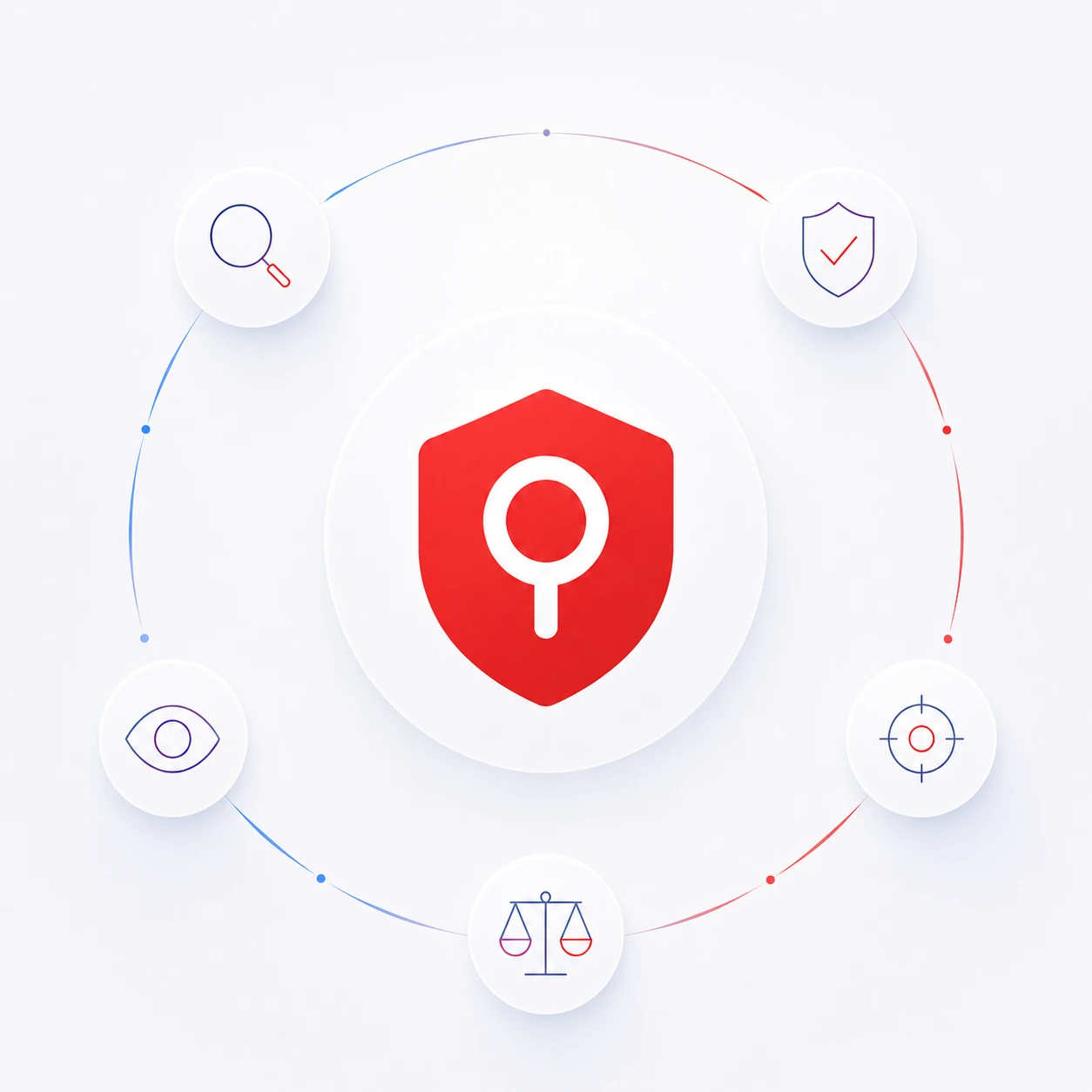
Find the stores before your customers do
EnforceShield scans the open web for Shopify-powered storefronts and lookalike domains using your brand name, product photography and copy. Suspects are verified and turned into cases, so your team gets a queue to approve rather than a list of domains to investigate.
Decide what is actually actionable
Every case is checked against the rights you hold and the behavior on the page. Copyright, trademark, trade dress, fraud — the route follows the violation. Cases that would not stand up never become filings.
File with page-level evidence
We assemble the rights information, the original material, the offending URLs and the declarations Shopify requires, then submit through the route that fits the case. Nothing here assumes one complaint removes an entire store.
Track outcomes, counter notices and relaunches
Filings, responses, removals and counter notices stay on the case. Monitoring continues for replacement pages and new domains, so a store that reopens connects to its own history instead of arriving as a fresh discovery.

Follow the operation past the storefront
Most fake stores are one piece of something larger: a domain, paid ads, a social account, search visibility. Persistent cases move into further evidence, re-filing, attorney review or a different enforcement channel.
Every Shopify case, from discovery to outcome
Filings, Shopify's responses, removals, counter notices and replacement stores on one screen, instead of across three inboxes and a spreadsheet.
 EnforceShield
What Clients Say
The fastest takedown service we've used.
Fraudulent websites using our copyrighted material were removed quickly and without friction.
O. Krumrey
Beaver Industrial Supply
Capabilities
Shopify Infringement We Act On
A fake store rarely misuses one asset. We validate what is actually behind each one before deciding how it gets enforced.
Fake stores and brand impersonation
Storefronts presenting themselves as you: your identity, your products, your creative, sometimes your entire site design.
Counterfeit products
Merchants selling fakes under your branding and packaging so the product reads as genuine to anyone who lands on the page.
Stolen images, copy and creative
Product photography, descriptions, graphics and video lifted from your site and republished as theirs.
Trademark and trade dress
Protected names, logos and distinctive product presentation used in a way that creates a connection you never authorized.
/ month
IP Violations Removed
Across marketplaces, social platforms and the open web
/ month
Revenue Protected
Across all enforcement channels
Takedown Success
On decided cases across the client base
Why EnforceShield
Built Around Cases, Not Forms
Anyone can open a reporting form. What decides the outcome is whether the case was validated before filing, whether the evidence holds, and whether anyone notices when the store comes back.
Attorney-engineered validation
Legal logic runs before enforcement, not after a rejection. The route follows the rights you actually hold, and weak complaints get filtered out before they become weak filings.

One case, start to finish
Discovery, evidence, filings, responses, counter notices and relaunches stay on the same case. Nothing important lives in someone's inbox.
Enforcement beyond Shopify
The same operation usually runs on a domain, in ads and on social. Your Shopify cases connect to enforcement on those channels instead of ending at the storefront.
See what fake-store enforcement looks like for your brand
Book a Live Walkthrough30-min call · Clear enforcement priorities · No obligation
Implementation
From Onboarding to Live Shopify Enforcement in 24 Hours
No implementation project. Once we know your assets, your rights and what is in scope, detection starts and the first cases follow.
Define scope
Send your domains, trademarks, product imagery and copyrighted assets, plus any fake stores you already know about. That is what detection runs against, and what enforcement is built on.
Configure access and rules
We tune detection and validation to your products and the patterns costing you most, set up the reporting access each Shopify route needs, and agree how much you want to approve yourself.
Run and report
Detection keeps running, new cases are validated and filed, and you see removals, open cases, counter notices and repeat stores as they move. Run it as software or hand it to our team — your call.
FAQ
Common Shopify Brand Protection Questions
Shopify brand protection is finding and enforcing against unauthorized use of your brand or intellectual property on Shopify-powered stores. That covers fake storefronts, counterfeit products, stolen creative and trademark misuse, each filed through the copyright, trademark or merchant-reporting route that fits the violation.
First confirm the store actually runs on Shopify, then work out what makes it actionable. Copied images or text point to copyright. Protected names and logos point to trademark or trade dress. Fraud and phishing go through Shopify's merchant-reporting route instead. EnforceShield handles that call, builds the evidence and files it.
You identify the original work you own and the exact Shopify URLs carrying the copied material, then submit the required copyright notice. Shopify can remove the reported content once the notice is valid. The merchant can dispute it with a counter notice.
Not from every complaint. Shopify may act on specific products or content, and can take account-level action when the circumstances justify it. We build the case around the violations we can actually evidence rather than promising whole-store removal.
A valid counter notice can restore the removed content after the DMCA waiting period, unless the rights holder takes qualifying legal action first. We track the counter notice, reassess the case and route it into further review or escalation — the first removal is not treated as the end of the matter.
Defend Your IP With Shopify Brand Protection
See which fake Shopify stores are using your brand right now, and what it takes to stop them coming back.
Review your current fake-store exposure and the cases worth filing first
See which copyright, trademark or policy route fits what you are facing
Understand how detection, filing, monitoring and escalation would run for your brand