Phishing Takedown Service
Put a Phishing Takedown Service Behind Every Fake Site
Fake sites cloning your brand can harvest customer credentials and payment details before anyone notices. EnforceShield tracks down the infrastructure behind each impersonating site and pursues enforcement for high-growth multichannel brands, with attorney-engineered validation behind every case.
Active Within 24 Hours
Attorney-Engineered
Host, Registrar or Abuse Route
Campaigns Tracked
126 brands under continuous enforcement

















The Problem
A Fake Site Is Deceiving the Customers Who Trust You
Cloned storefronts, fake login pages and impersonating support channels can deceive customers into handing over credentials or payment details they think are safe. Every one left live turns into "I never got my order" tickets, chargebacks and reviews that blame your real brand, not the people behind the fake site.

Brand impersonation fools customers who trust you
A cloned storefront, login page or support channel can look convincing enough that customers never question it. Every credential or payment detail handed over there becomes fraud exposure and reputational damage on your real brand, while the attacker walks away clean.

Fragmented infrastructure slows down every takedown
Before anyone can act, someone has to figure out where the site is really hosted, who registered the domain and which provider can take it down. Every hour spent on that investigation is another hour the site stays live and collecting customer data.
Weak evidence makes takedowns stall
A takedown request still needs the phishing URL documented, the impersonation or rights basis identified, and evidence a provider will accept. A generic or incomplete report just gets sent back with questions, which means more delay and more repeat work for your team.
One removal rarely ends a coordinated campaign
Attackers rebuild the same page under a new URL, move to a different provider, or run the same campaign alongside fake social accounts. Handled one ticket at a time, this kind of campaign keeps resurfacing faster than isolated takedowns can keep up.
The Status Quo
Monitoring Is Not Enforcement
Real phishing takedown work runs as one connected system, from first detection to escalation. Most alternatives cover a single piece of it and leave the rest to your team.
Manual abuse reporting
Investigating URLs and providers, collecting screenshots and evidence, filing abuse forms and following up all takes real time. That's manageable for one phishing site. It stops being manageable once several sites need handling at once, or the same campaign keeps returning.
Phishing detection and security tools
Threat feeds, alerts and blocking controls protect your own users from a known phishing site, but they don't touch the site itself. Validating the threat, preparing a defensible case and pursuing removal of the actual infrastructure is separate work that still has to happen.
One-off takedown services
A one-off fake website phishing removal service can resolve a single live incident well. What it doesn't provide is continuous discovery, a connected view across wider brand abuse, or a systematic response the next time the same campaign reappears under a new URL.
The Solution
One System That Runs Phishing Takedowns From Detection to Recurrence
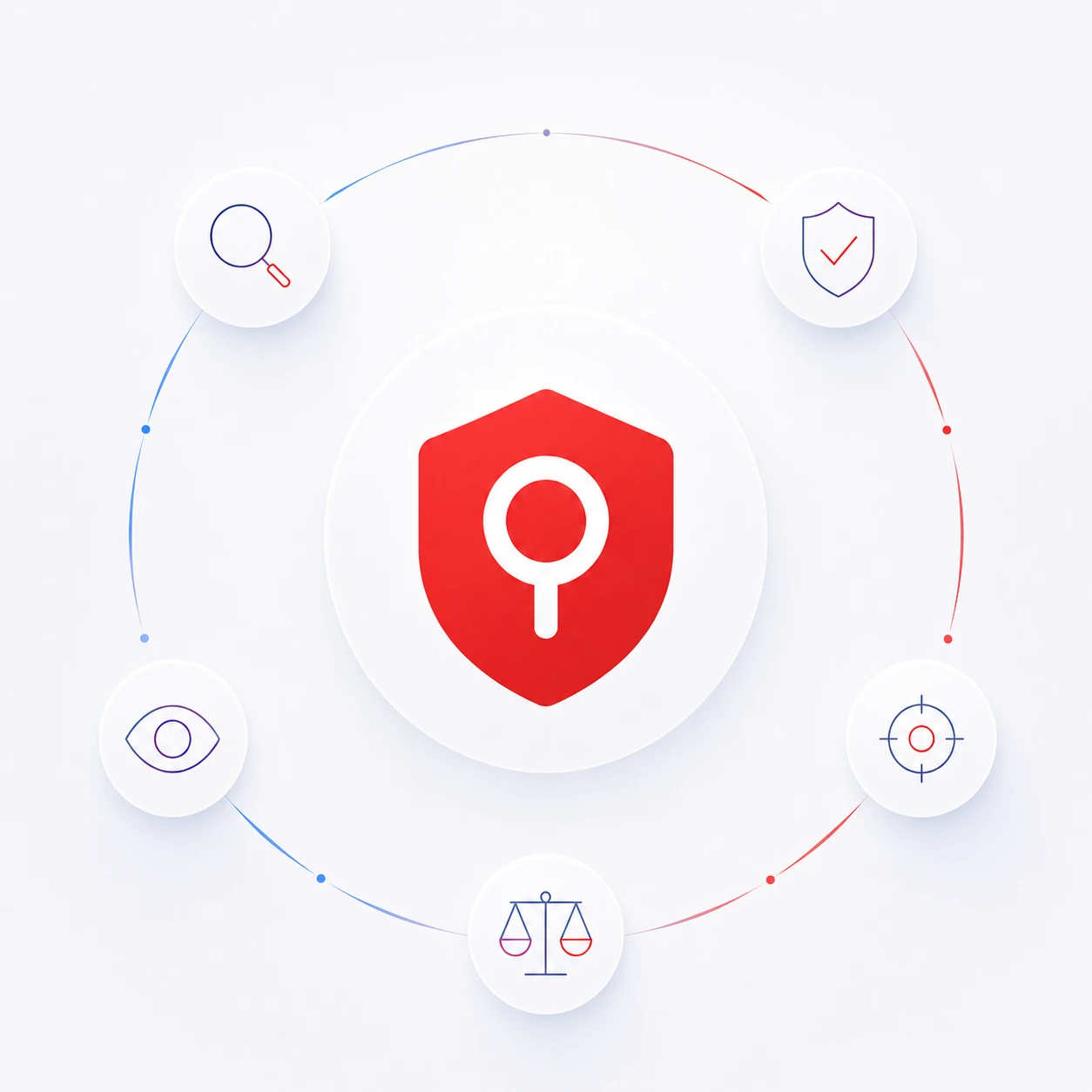
EnforceShield replaces fragmented phishing discovery and manual reporting with one connected system: Detect, Validate, Enforce, Monitor, Escalate. It's attorney-engineered and machine-executed, with attorney review and escalation where required, rather than stitched together across separate tools.

Detect phishing and brand impersonation threats
EnforceShield continuously identifies suspected fake websites and other agreed brand-impersonation signals, including cloned site assets and deceptive customer-facing experiences built to look like yours. Earlier visibility means a case gets built while the site is still new, instead of after customers have already found it.

Validate the threat and build the evidence
Each suspected site is confirmed as genuinely deceptive before anything moves forward, with URLs, screenshots and provider information collected against the appropriate brand, IP or platform basis. False matches and legitimate sites get filtered out here, so only evidence-ready cases reach enforcement.

Send the takedown through the appropriate route
Each validated case is submitted through the hosting provider, platform or abuse channel that really applies, including direct abuse-email escalation where a formal reporting route isn't available. Different providers use different processes, so the route is matched to what each one supports rather than one generic notice.
Monitor removal and watch for recurrence
Case status, provider responses and successful removals are tracked and verified, confirming the site is really gone rather than just marking a ticket closed. EnforceShield also keeps watching for the same impersonation resurfacing through a new URL or a related channel.

Escalate persistent and cross-channel phishing abuse
When standard provider action stalls or a threat returns, cases move into further follow-up, alternative abuse routes or attorney review as appropriate. Where the same campaign also runs through social, search or ads, the relevant EnforceShield enforcement workflow for that channel coordinates with the takedown case.
Every takedown, from first sighting to verified removal
Provider responses, confirmed removals and the URLs a campaign moves to next, recorded in one place instead of an abuse-report inbox.
 EnforceShield
What Clients Say
When someone buys Moérie, it should actually be Moérie.
EnforceShield found and removed the counterfeit listings across eBay, Alibaba and Amazon.
Kipras Kazlauskas
Co-founder, Moérie
Capabilities
Built to Handle Every Type of Phishing and Impersonation Abuse
A cloned storefront and a fake support channel look different to a customer, but both fall under the same enforcement scope: the impersonation patterns that put customers and brand trust at risk.

Cloned websites and storefronts
Sites copying your brand identity, design or ecommerce experience to deceive customers into thinking they're on your real site.

Credential and payment harvesting pages
Fake login, account, checkout or payment experiences impersonating your brand, wherever supported evidence allows enforcement.

Fake customer support and brand impersonation
Malicious pages or supported platform accounts presenting themselves as your official support or customer-service channels.

Coordinated cross-channel phishing campaigns
Campaigns that combine a phishing site with supported social, search or advertising infringement, handled through coordinated enforcement instead of separate, disconnected cases.
Fake stores that take payment and never ship
Storefronts using your name to collect orders and card details for products that never arrive, leaving your support team to handle the fallout.

Lookalike and typosquatted domains
New domains built on misspellings or variations of your brand name, pursued before or as they go live as phishing infrastructure.
/ month
IP Violations Removed
Across marketplaces, social platforms and the open web
/ month
Revenue Protected
Across all enforcement channels
Takedown Success
On decided cases across the client base
Why EnforceShield
Phishing Takedowns Built on Execution, Not Alerts
Most phishing detection vendors compete on how fast they can flag a threat. EnforceShield is IP enforcement software that picks up where detection stops. What separates providers is validation quality, enforcement execution, how recurrence is handled, and how much work lands back on your team.
Attorney-engineered validation
Every case gets checked against the relevant brand, IP or platform-policy basis before a human reviewer even opens it.
Pricing that doesn't grow with your problem
Priced per brand and SKU, not per takedown. When a launch triples the number of cloned sites, your bill stays where it was.
Protection before your trademark is registered
Enforcement can rest on copyright in your product photos and packaging, design rights and trade dress, so a new SKU is covered from launch day, not months later when registration completes.
Coverage
Built to Address Phishing Across Every Surface a Campaign Uses
EnforceShield uses the platform-appropriate reporting route each surface requires, while centralizing visibility and case management in one place, so coverage stays platform-relevant without fragmenting your operations.
Websites & hosting providers
The primary enforcement surface, where the phishing site itself is hosted and taken down.

Social media
Fake profiles and content supporting a phishing campaign addressed alongside the primary site takedown.
Search engines
Phishing pages surfacing in search results delisted through the relevant copyright or platform-policy route.

Advertising platforms
Malicious or infringing ads driving traffic to a phishing site enforced through each platform's abuse reporting process.
See where your brand is being impersonated right now
Book a Live Walkthrough30-min call · Clear enforcement priorities · No obligation
Implementation
From Onboarding to Live Phishing Takedowns Within 24 Hours
Starting doesn't require months of setup. EnforceShield can move from onboarding to active enforcement within 24 hours once your team provides the details below.
Define scope
Share your brand assets (logos, trademarks, site design elements) and any known phishing sites or recurring impersonation campaigns. This sets the boundaries of what EnforceShield will detect and act on from day one.
Configure access and rules
Platform scope, detection and validation parameters, and the reporting access EnforceShield needs are set up together with your team.
Run and report continuously
From there, EnforceShield runs the agreed approval and service model on its own, monitoring, validating and filing takedown requests, with reporting that keeps legal and security looking at the same outcomes.
FAQ
Common Phishing Takedown Questions
A phishing takedown service finds fake websites that impersonate a brand to steal customer logins or payment details, and gets them taken offline through the hosting provider, registrar or abuse channel responsible. EnforceShield builds an evidence-ready case for each site, submits it through the right route and keeps watching for the same campaign returning on a new URL.
Turn Phishing Detection Into Real Takedowns
See where your brand is being impersonated and what a takedown would look like across your priority surfaces.
Review your priority surfaces and current phishing exposure with an EnforceShield expert
See where phishing sites are slipping through your current response
Walk away with a clear picture of what continuous enforcement would look like for your brand