AI Search Brand Protection
Take AI Brand Protection to the Source
ChatGPT, Perplexity and Google AI Mode can point purchase-ready buyers straight to counterfeit listings and fake stores. EnforceShield detects, validates and routes those citations into real enforcement for high-growth multichannel brands, with attorney-engineered validation behind every case.
Active Within 24 Hours
Attorney-Engineered
Three AI Assistants
Queries Rerun Over Time
126 brands under continuous enforcement

















The Problem
AI Assistants Are Recommending Sources You've Never Reviewed
When someone asks an AI assistant where to buy your product, the answer can cite a counterfeit listing or a fake store right alongside legitimate options. Every citation you haven't checked is a buyer sent somewhere you don't control, with your existing brand-protection program never seeing it happen.
AI recommendations reach buyers ready to purchase
AI assistants answer buying questions by citing marketplace listings, stores or product pages directly. When a counterfeit or infringing source appears next to your legitimate listings, it inherits the same credibility as the answer itself, at the exact moment a buyer is ready to purchase.

Dynamic answers slip past traditional monitoring
Unlike a static search results page, what an AI assistant cites depends on the prompt, the assistant and sometimes the exact moment you ask. Occasional manual checks catch a snapshot at best, which leaves most of what buyers are actually shown outside anyone's view.
A citation is a lead that still needs confirming
An unfamiliar citation isn't automatically an infringement. Someone still has to resolve where it actually points, identify the underlying platform or site, and confirm a real counterfeit or IP basis before it becomes an enforcement case, not just a suspicious link.

AI has no takedown button, so teams must act at the source
Finding a bad recommendation inside an AI answer doesn't remove anything by itself. The actual fix happens at the source — the marketplace listing, the website or the seller account — which means AI findings only matter once they connect into real enforcement.
The Status Quo
Monitoring Is Not Enforcement
Real AI brand protection runs as one connected system, from first detection to escalation. Most alternatives cover a single piece of it and leave the rest to your team.
Manual AI assistant checks
Manually running buyer and product prompts across assistants can surface a bad citation here and there, but it doesn't scale, and coverage stays inconsistent. Once something suspicious turns up, the investigation and enforcement work still hasn't started.

LLM and AI visibility monitoring tools
These tools are built to track brand mentions and citation frequency for marketing purposes, which is a different question from whether a cited source represents actionable counterfeit or IP infringement. Spotting a citation and enforcing against it are two separate jobs.

Traditional marketplace and web monitoring
Watching Amazon, your website and search directly says nothing about what an AI assistant actually tells a shopper. That's a separate discovery layer, and without testing it directly, it stays invisible to programs built around traditional channels.
The Solution
One System That Connects AI Discovery to Real Enforcement
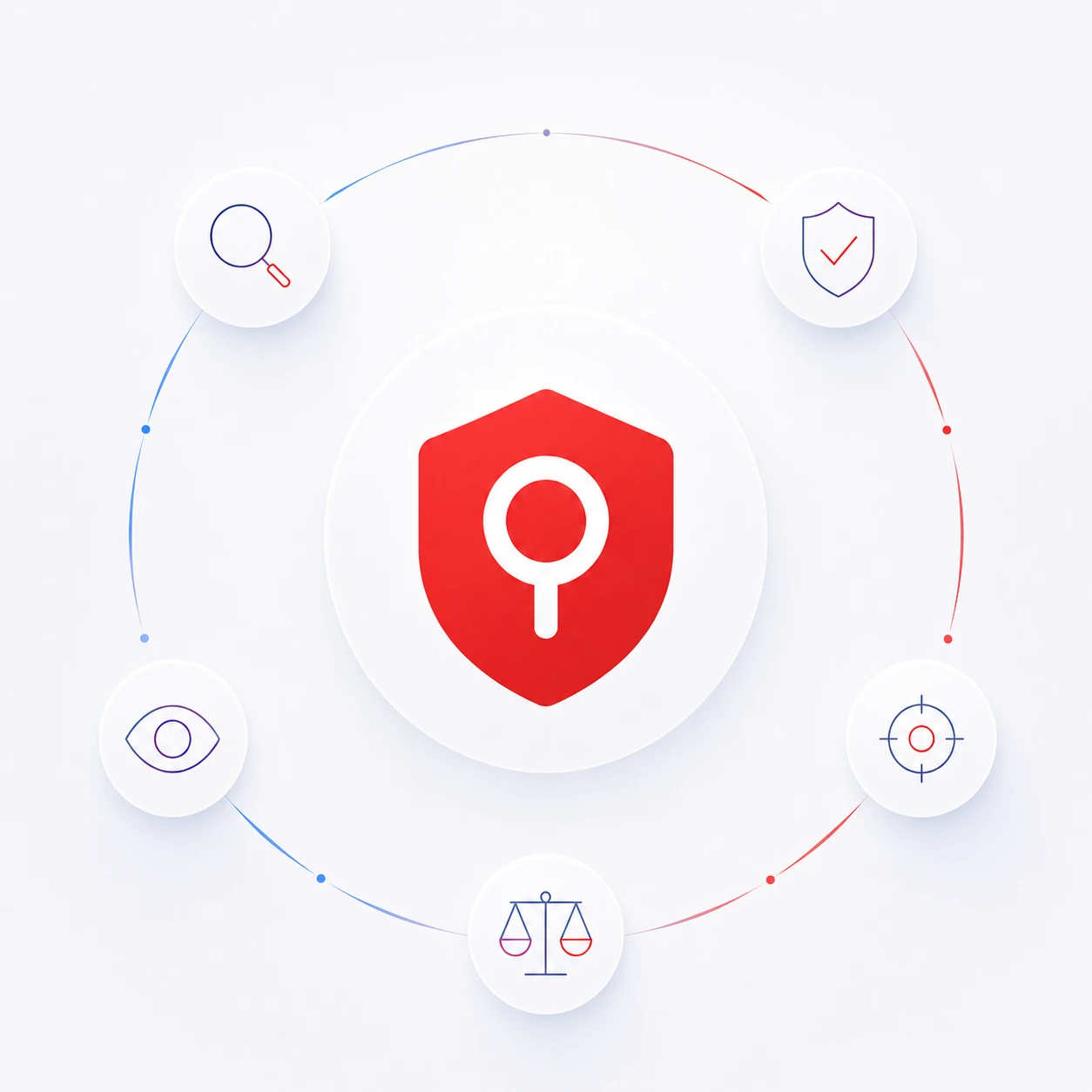
EnforceShield extends brand protection into AI-assisted discovery with the same connected system: Detect, Validate, Enforce, Monitor, Escalate. AI assistants provide the discovery signal; enforcement always targets the underlying marketplace, website or seller the citation points to, attorney-engineered and machine-executed throughout.

Detect risky sources inside AI answers
EnforceShield runs realistic buying and product queries across supported AI assistants, capturing the links and sources each answer cites and classifying them against known marketplaces and other destinations. Finding counterfeit links in AI answers this way gives your team visibility into buyer journeys most programs never test directly.

Validate the cited source and infringement
Each cited source gets resolved to its actual destination, classified against the underlying marketplace or site, and assessed for an actionable counterfeit or IP basis. Legitimate and non-actionable sources get filtered out here, so an unfamiliar citation never automatically becomes a case.

Route actionable citations into source enforcement
A validated AI-originated finding gets routed into the appropriate existing marketplace, website or other channel workflow. From that point, the same channel-specific evidence and takedown process handles it as any other case, without a separate track just for AI-sourced findings.

Monitor whether harmful sources keep resurfacing
EnforceShield keeps rerunning the same queries over time, tracking whether a removed source reappears in AI answers or a new infringing source takes its place. Recurrence at the AI-citation level gets caught the same way recurrence gets caught anywhere else.

Escalate persistent abuse through the underlying channel
When a cited infringement stays live, returns, or migrates to another seller, site or platform, the case moves into re-enforcement or attorney-led escalation through the channel that actually supports it. The AI citation was the discovery path; the escalation follows the source.
Every AI citation, from answer to enforcement
Which assistant cited what, where it actually pointed, and what happened to the source — recorded in one place.
 EnforceShield
What Clients Say
When someone buys Moérie, it should actually be Moérie.
EnforceShield found and removed the counterfeit listings across eBay, Alibaba and Amazon.
Kipras Kazlauskas
Co-founder, Moérie
Capabilities
Built to Handle Every Type of AI-Cited Abuse
Counterfeit marketplace links and fake stores are the citations that cost you the most buyers. EnforceShield covers both, and everything else an AI assistant might surface.

Counterfeit marketplace links
AI answers directing shoppers to suspected counterfeit listings on supported marketplaces.

Fake and impersonating stores
Cited independent sites or storefronts copying your brand or selling suspected counterfeit products.

Unauthorized or high-risk seller sources
Seller links surfaced through AI where further investigation identifies an actionable IP, counterfeit or platform-policy basis.

Copied product and brand assets
Cited pages using your protected product imagery, content or brand identity where source-level enforcement is supported.
/ month
IP Violations Removed
Across marketplaces, social platforms and the open web
/ month
Revenue Protected
Across all enforcement channels
Takedown Success
On decided cases across the client base
Why EnforceShield
AI Search Brand Protection Built on Execution, Not Alerts
Most AI visibility vendors compete on how many mentions or citations they can track. EnforceShield is IP enforcement software that starts where AI visibility tools stop. What separates providers is validation quality, enforcement execution, how recurrence is handled, and how much work lands back on your team.
Attorney-engineered validation
A citation gets checked against the same trademark, counterfeit and platform-policy criteria as any other case before a human reviewer opens it.
Pricing that doesn't grow with your problem
Priced per brand and SKU, not per takedown. When a launch triples the number of cited counterfeit sources, your bill stays where it was.

Protection before your trademark is registered
Enforcement can rest on copyright in your product photos and packaging, design rights and trade dress, so a new SKU is covered from launch day, not months later when registration completes.
Coverage
Built for the AI Assistants Buyers Actually Use
EnforceShield tests the assistants where AI-driven buying queries actually happen, then routes any actionable finding into the source-level enforcement route that already applies, so coverage stays grounded in real enforcement rather than a separate AI-only process.

ChatGPT
Brand protection in ChatGPT starts with buying-query citations tested and matched against known marketplaces before any finding moves toward enforcement.

Perplexity
Cited sources in shopping-related answers checked against the same validation criteria used across every other channel.

Google AI Mode
Product recommendations and cited links tested for counterfeit and infringing sources reaching purchase-ready searchers.
See what AI assistants are telling your buyers right now
Book a Live Walkthrough30-min call · Clear enforcement priorities · No obligation
Implementation
From Onboarding to Active AI Search Enforcement Within 24 Hours
Starting doesn't require months of setup. EnforceShield can move from onboarding to active enforcement within 24 hours once your team provides the details below.
Define scope
Share your priority products, typical buying queries customers might ask an AI assistant, and any known infringing sources or recurring problem sellers. This sets the boundaries of what EnforceShield will detect and act on from day one.
Configure access and rules
Platform scope, detection and validation parameters, and the reporting access EnforceShield needs are set up together with your team.
Run and report continuously
From there, EnforceShield keeps running the same queries, validating new citations and filing cases under the model you've agreed to, with reporting that keeps legal and ecommerce looking at the same outcomes.
FAQ
Common AI Search Enforcement Questions
AI search brand protection means checking which sources AI assistants such as ChatGPT, Perplexity and Google AI Mode recommend when buyers ask where to buy a product, and removing the counterfeit or infringing ones at their source. EnforceShield doesn't edit AI answers; it enforces against the marketplace listing, website or seller the answer cites.
Turn AI Brand Protection Into Real Enforcement
See where AI assistants are exposing your buyers to infringing sources and what enforcement would look like from there.
Review your priority AI assistants and current exposure with an EnforceShield expert
See how many AI-cited sources are still sitting there unenforced
Walk away with a clear picture of how continuous enforcement would close that gap